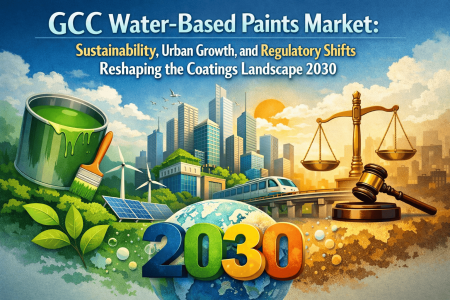
The paint and coating sector in the Gulf Cooperation Council (GCC) region is changing its structure. Regulatory reforms, environmental issues and changing standards of construction are among the most apparent causes of changes, as the gradual shift to water-based paints has taken place. Water-based coats, which are characterized by reduced volatile organic compounds (VOC) emissions and better Indoor Air Quality performance, are being increasingly used in residential and commercial as well as infrastructure projects.
According to the research conducted by MarkNtel Advisors, the GCC Water-Based Paints Market is expected to experience a significant rate of growth over the forecast period owing to the growth of construction efforts and sustainability-based procurement measures. The transition is indicative of macro-economic diversification and environmental policies within the region.
The IAQ certification is emerging as a procurement criterion in massive residential and commercial residential development projects. The use of water based paints helps in the shortening of drying time, lowering of odor and safety during the application process. These features qualify them to be used in urban residential construction projects whereby constrained construction timetables and occupational timetables require effective finishing solutions.
Home construction projects, commercial-residential projects, and hospitality industry projects can be singled out as especially important in the consumption of decorative paint. Interior walls, ceilings, and architectural finishes that are based on water are common because they are simple to apply and maintain.
Low-odor, fast drying properties are beneficial in terms of operations in commercial segments such as in retail malls, office spaces, and educational institutions. The development of a steady demand is also being driven by repainting cycles as urbanization gains momentum in major urban centers, and the population continues to grow in major metropolitan centers.
These regulatory directions are in line with water-based paints, which have low solvent emissions. Green building programs promoted by the government are motivating developers to use building materials that are environmental friendly. Although solvent-based paints retain certain industrial uses, decorative and more general architectural uses are gradually moving to water-based systems.
This regulation convergence is taking shape in the procurement strategies not only in the development of the infrastructure at the government level but also the developments in the private sector.
The resin formulations have also been able to improve the properties of durability, adhesion, and resistance through technological advancements. Such developments are assisting water-based systems to compete more favorably with the traditional solvent-based systems in the limited number of industrial applications.
Nevertheless, performance requirements in severe weather conditions such as high temperature and humidity caused in GCC countries demand special formulation changes. The local manufacturers are investing in research to develop products that would fit the local environmental conditions.
Basing water-based formulations is done on acrylic and latex-based binders; which are affected by the petrochemical feedstock markets. Since the GCC region is closely linked in terms of petrochemical base, local production opportunities could offer some competitive benefits in the sourcing of raw materials. However, the volatility of prices is also an element that affects procurement choices.
The manufacturers and distributors are also reacting by streamlining supply networks and increasing local blending plants to improve efficiency in costs and lead times.
Firms are working on the advanced performance of formulation, washability, and climate-resistant coating that is applicable in desert conditions. The customer expectations are also changing and branding strategies are currently focusing more on the environmental compliance and sustainability attributes.
These distribution channels are direct project sales, retail hardware, and contractor partners. With the increasing complexity of urban infrastructure projects, project based procurement is still shaping demand trends.
United Arab Emirates is still pushing the repainting business with property upgrades, hospitality and commercial renovations. Qatar and Kuwait are experiencing a gradual modernization of infrastructure and Oman and Bahrain demonstrate the consistent demand regarding residential and tourism-related projects.
Even though maturity in the markets is not the same in every country, the similarity is the increasing inclination towards environment-compliant materials.
Water systems will likely keep on increasing their market share in the decorative markets. But solvent-based coatings can still be significant in some of the more hard-working industrial applications where performance factors vary.
According to the analysis conducted by MarkNtel Advisors, market pattern indicates long term structural industry development and not a temporary variation. The slow merging of environmental compliance standards, urban growth, construction of infrastructures offers a consistent base of demand.
Overall, the category of paints based on water is not an alternative product; it is a move towards sustainability, regulatory policies, and the current construction trends in the GCC region.
According to the research conducted by MarkNtel Advisors, the GCC Water-Based Paints Market is expected to experience a significant rate of growth over the forecast period owing to the growth of construction efforts and sustainability-based procurement measures. The transition is indicative of macro-economic diversification and environmental policies within the region.
The reason as to why water-based paints are becoming popular.
Water-based-paints involve the use of water as the main solvent rather than solvents based on petroleum. This piece of composition contributes greatly to the reduction of VOCs that are related to air pollution and health issues. With the GCC governments putting up an environmentally more compliance requirements, the contractors and developers are more and more specifying low emission of coating.The IAQ certification is emerging as a procurement criterion in massive residential and commercial residential development projects. The use of water based paints helps in the shortening of drying time, lowering of odor and safety during the application process. These features qualify them to be used in urban residential construction projects whereby constrained construction timetables and occupational timetables require effective finishing solutions.
Construction Demand as a Principal Core Demand.
The GCC region is still rampant in real estate, tourism infrastructural development, industrial belts, and communal amenities. The increasing demand base of decorative and protective coatings in countries like Saudi Arabia and United Arab Emirates is a result of mega projects taking place in the areas.Home construction projects, commercial-residential projects, and hospitality industry projects can be singled out as especially important in the consumption of decorative paint. Interior walls, ceilings, and architectural finishes that are based on water are common because they are simple to apply and maintain.
Low-odor, fast drying properties are beneficial in terms of operations in commercial segments such as in retail malls, office spaces, and educational institutions. The development of a steady demand is also being driven by repainting cycles as urbanization gains momentum in major urban centers, and the population continues to grow in major metropolitan centers.
Aligning Regulatory and Environmental Policies.
The environmental governance systems in the GCC countries are slowly being simplified to the international standards of sustainability. Energy efficiency and environmental compliance rules and regulations are finding their way into the building codes, which indirectly affects the choice of materials, such as paints and coatings.These regulatory directions are in line with water-based paints, which have low solvent emissions. Green building programs promoted by the government are motivating developers to use building materials that are environmental friendly. Although solvent-based paints retain certain industrial uses, decorative and more general architectural uses are gradually moving to water-based systems.
This regulation convergence is taking shape in the procurement strategies not only in the development of the infrastructure at the government level but also the developments in the private sector.
Industrial Applications and Coatings of Protection.
In spite of the overall consumption being dominated by decorative uses, industrial uses are also a viable segment. The use of water based coats is growing in light industrial setting, metal work and in some infrastructure settings where the environmental considerations are given prominence.The resin formulations have also been able to improve the properties of durability, adhesion, and resistance through technological advancements. Such developments are assisting water-based systems to compete more favorably with the traditional solvent-based systems in the limited number of industrial applications.
Nevertheless, performance requirements in severe weather conditions such as high temperature and humidity caused in GCC countries demand special formulation changes. The local manufacturers are investing in research to develop products that would fit the local environmental conditions.
Consideration of the Supply Chain and Raw Materials.
Paints and coatings business is sensitive to the changes in the availability of raw materials such as resins, pigments, and additives. Coatings Global supply chain disruptions over the past years have influenced pricing structures in the coatings industry.Basing water-based formulations is done on acrylic and latex-based binders; which are affected by the petrochemical feedstock markets. Since the GCC region is closely linked in terms of petrochemical base, local production opportunities could offer some competitive benefits in the sourcing of raw materials. However, the volatility of prices is also an element that affects procurement choices.
The manufacturers and distributors are also reacting by streamlining supply networks and increasing local blending plants to improve efficiency in costs and lead times.
Competitive Landscape
The GCC Water-Based Paints Market competitive environment consists of regional and multinational manufacturers of paint. The market players are preoccupied with product innovation, compliance with regulations, and expansion of distribution network to sustain positioning.Firms are working on the advanced performance of formulation, washability, and climate-resistant coating that is applicable in desert conditions. The customer expectations are also changing and branding strategies are currently focusing more on the environmental compliance and sustainability attributes.
These distribution channels are direct project sales, retail hardware, and contractor partners. With the increasing complexity of urban infrastructure projects, project based procurement is still shaping demand trends.
Dynamics in Countries within the GCC.
Saudi Arabia is a major market participant as it has major infrastructure projects and housing programs. Construction activities are increasing and this is being indirectly aided by national development programs that are boosting the demand of coatings.United Arab Emirates is still pushing the repainting business with property upgrades, hospitality and commercial renovations. Qatar and Kuwait are experiencing a gradual modernization of infrastructure and Oman and Bahrain demonstrate the consistent demand regarding residential and tourism-related projects.
Even though maturity in the markets is not the same in every country, the similarity is the increasing inclination towards environment-compliant materials.
Prognosis: Moderate Growth as Structurally Driven.
The GCC Water-Based Paints Market is expected to follow in the same direction as the general economic transformation in the region. The continuity of pipeline construction, sustainability requirement and technological development of formulations all influence future development possibilities.Water systems will likely keep on increasing their market share in the decorative markets. But solvent-based coatings can still be significant in some of the more hard-working industrial applications where performance factors vary.
According to the analysis conducted by MarkNtel Advisors, market pattern indicates long term structural industry development and not a temporary variation. The slow merging of environmental compliance standards, urban growth, construction of infrastructures offers a consistent base of demand.
Overall, the category of paints based on water is not an alternative product; it is a move towards sustainability, regulatory policies, and the current construction trends in the GCC region.